Event IndustryEvent Industry Prediction for 2026 - The Rise of Agentic Events
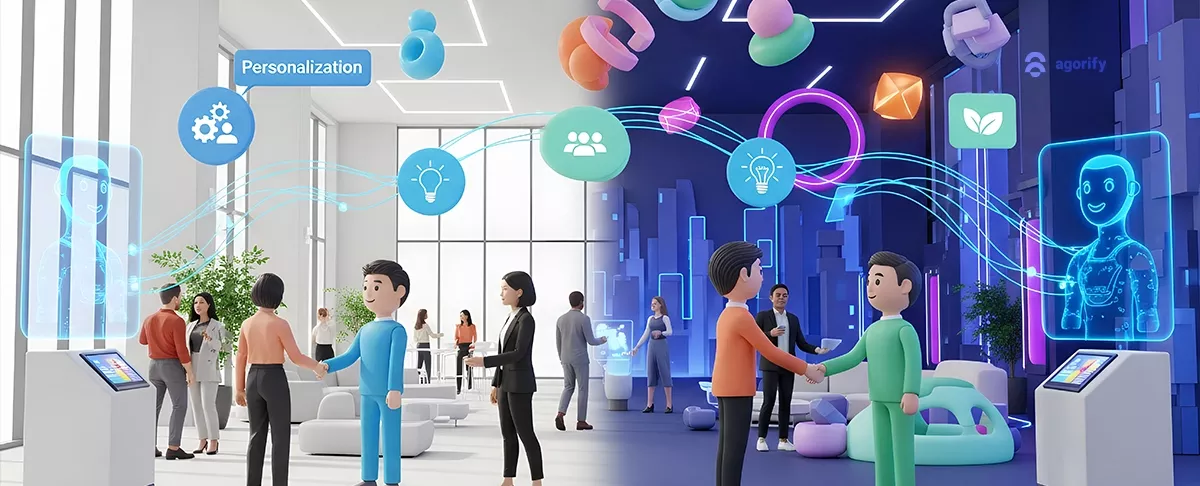
If 2024 and 2025 were about experimenting with AI tools in events, then 2026 will be the year AI becomes an active participant in how events are planned, experienced and monetized.
The shift we are about to see is not just more automation. It is a move toward agentic events. Events where AI systems do not simply respond to inputs, but actively operate on behalf of people, make decisions within clear boundaries and continuously optimize outcomes before, during and after the event.
This will fundamentally change how every stakeholder in the event ecosystem operates.
What does agentic AI actually mean
Agentic AI refers to AI systems that can take initiative. Instead of waiting for commands, an agent understands goals, context and constraints and decides what actions to take to move toward those goals.
In an event context, this means AI systems that do not just present options, but manage parts of the experience. An agent understands what an attendee is trying to achieve, what time they have, what matters most and what is happening around them, and then acts accordingly.
It can also mean AI acting on behalf of organizers, continuously monitoring engagement, traffic flows, no shows, exhibitor performance and sponsor outcomes, and making real time adjustments while the event is still live.
This is the difference between AI as a tool and AI as a collaborator.
Agentic AI for organizers
Organizers sit at the center of everything. Planning the event, finding speakers and sponsors, selling tickets, communicating with attendees and coordinating suppliers all runs through them. When something changes, they are the ones expected to fix it.
Agentic AI acts like an extra layer of operational support that works across the entire event lifecycle.
Instead of handling every task manually, organizers define what they want to achieve and let agents take care of the coordination.
An organizer agent might do things like:
- Help plan the event by shaping the agenda, formats and capacity based on goals and audience demand
- Assist with sourcing speakers, sponsors and partners by identifying matches and handling initial outreach
- Support sponsorship sales by aligning sponsor goals with the right audience segments and opportunities
- Manage event communications by sending the right messages to the right people at the right time
- Optimize ticket sales by adjusting pricing and messaging as demand changes
- Monitor the event as it unfolds and step in when something needs attention
- Escalate only the decisions that truly need a human involved
This allows organizers to spend less time coordinating details and more time focusing on the quality and impact of the event.
Agentic AI for attendees
For attendees, agentic events remove friction, choice overload and constant decision making.
Instead of scrolling through agendas, comparing sessions and manually coordinating meetings, attendees are supported by a personal event agent that manages the flow of their experience.
An attendee agent might do things like:
- Find relevant events to attend based on interests, role and past behavior
- Keep the attendee's agenda up to date automatically based on interests, time and what is happening at the event
- Book and reschedule meetings on the attendee's behalf within agreed preferences
- Adjust the day when sessions change, fill up or get canceled without the attendee having to manage it
- Summarize missed sessions so the attendee stays informed without watching recordings
- Handle simple buying and deal steps such as requesting offers, booking demos or making small purchases when there is clear interest
The result is an event experience that feels guided, efficient and intentional rather than overwhelming.
Agentic AI for speakers
Speakers are often under supported in today's events. Agentic AI changes that dynamic.
A speaker agent might do things like:
- Review the audience before the event and help shape the session to match who will be in the room
- Improve slides and talking points based on what has worked well in past sessions
- Take care of presentation logistics by making sure the right slides are ready on stage in the correct format, coordinating once with the AV team
- Track how the audience is responding during the session and help adjust pacing or focus
- Highlight the most relevant questions and discussion points as they come in
- Summarize how the session performed and suggest follow ups after it ends
Over time, the speaker builds a performance profile across events, enabling continuous improvement and clearer demonstration of value to organizers and partners.
Agentic AI for exhibitors and sponsors
Exhibitors and sponsors are ultimately measured on outcomes. Agentic AI shifts their role from passive presence to active participation inside the event.
Instead of relying on static booths, fixed sponsorship placements and manual lead handling, agentic systems continuously operate on their behalf to create relevant commercial interactions.
An exhibitor and sponsor agent might do things like:
- Spot attendees who are likely to be interested based on what they do at the event
- Book or suggest meetings automatically within agreed rules and availability
- Help booth staff know who to talk to, when to engage and what matters to each person
- Adjust sponsor and exhibitor visibility based on what audiences are engaging with in real time
- Handle follow ups automatically with the right message at the right time after each interaction
- Show clear results by connecting meetings and engagement to real business outcomes
The result is a shift from counting scans and impressions to understanding influence, relevance and return on participation.
Agentic AI for venues
Venues sit at the center of event logistics, balancing experience, safety and operational efficiency. Agentic AI allows venues to move from reactive operations to proactive orchestration.
Instead of relying on static floor plans and manual adjustments, venue agents continuously manage space, flow and resources as the event unfolds.
A venue agent might do things like:
- Keep track of where people are and how full different areas are in real time
- Move sessions to better suited rooms when attendance changes
- Adjust staffing and services based on what is actually happening on site
- Spot crowding early and help guide people to avoid congestion
- Adapt lighting, temperature and signage to fit how spaces are being used
- Capture insights that help improve venue layouts and operations for future events
This turns venues from passive infrastructure into active participants in delivering smooth, safe and high quality event experiences.
Agentic AI for suppliers and partners
Suppliers and partners are essential to event delivery, yet they are often forced to operate on assumptions made weeks in advance. Agentic AI allows them to shift from reactive execution to predictive and adaptive service delivery.
Instead of fixed orders and manual coordination, supplier agents operate continuously, adjusting to what is actually happening on site.
A supplier or partner agent might do things like:
- Anticipate demand based on how many people are attending and how they are moving through the event
- Adjust quantities for badges, catering, printed materials or equipment as needs change
- Plan deliveries and setup based on what is actually happening on site
- Spot service issues early and fix them before they become problems
- Balance resources across different areas or events without manual coordination
- Capture insights that help improve services and pricing for future events
This transforms suppliers from interchangeable vendors into intelligent partners that improve efficiency, reduce waste and elevate overall event quality.
What this means for the industry
Agentic events blur the line between software and operations. Platforms no longer just provide features. They provide intelligence and delegated decision making.
For organizers, this means fewer manual interventions and better outcomes. For attendees, more value with less effort. For exhibitors and sponsors, clearer ROI. For the ecosystem as a whole, events that feel more human, not more technical.
There is a paradox at the heart of agentic events. The more power we delegate to non-human agents, the more human the experience becomes. When AI takes responsibility for coordination, optimization and logistics, people are no longer stuck managing systems. They can focus on conversations, learning and being present in the moment.
This is the direction Agorify is moving toward - quietly working in the background, enabling better decisions, smoother flows, and more relevant experiences without demanding constant attention.
2026 will not be about adding more technology to events. It will be about letting technology act on humans' behalf, so we can be present - the main point of our event industry prediction for 2026.
That is what agentic events really represent. And that is the future Agorify is being built for. Get started with Agorify FREE!